


 Fixed Income
  Equity
  Money Market
  Digital Issuance
  Digital Financial Asset
  Sharehareholders' or Investors' Meetings
  Dividend Payments
  Corporate and/or Debt Restructuring
  Other Corporate Actions
  Special Pledge
  Electronic Pledge Registry Service (REP)
  Notarial Pledges
  Mining Guarantees
  Judicial Attachments and Court-Ordered Measures
  Forward Contracts Requirements

 Responsible Tax Agent
  Tax Statements
  Captable
  Custody of Financial Instruments
  Regulatory Framework
  Corporate Policies
  List of Circulars
  Regulatory Compliance
  Crime Prevention
  IOSCO Principles
  Operational Risk
  Business Continuity
  Information Security
  Board Meeting Minutes
  Annual Reports
  Financial Statements and Notes
  Bylaws
  Fee Structure Study
  Service Fees
  Who We Are
 Sustainability at DCV


Reading time: 4 minutes
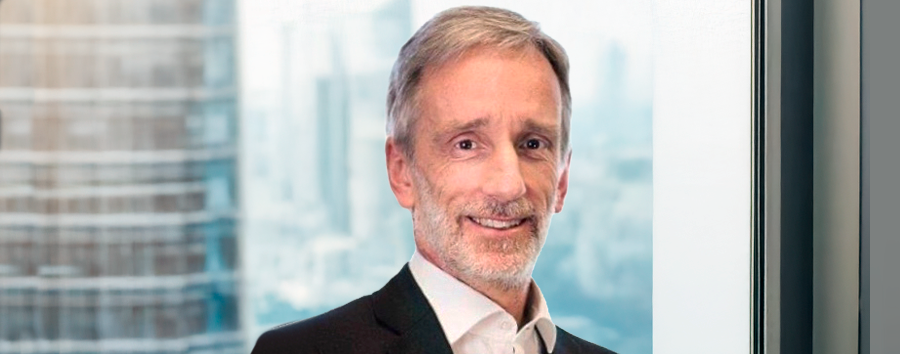
Manuel Widow recently joined the Central Securities Depository (DCV) as Finance Manager, bringing with him more than 20 years of experience.
With experience in banking, energy, and international companies, he joins DCV at a time of consolidation and evolution of its role within the Chilean financial system, marked by technological transformation, the growth of new services, and the strengthening of its operational infrastructure.
In this interview, Manuel shares his professional journey, the motivations that brought him to DCV, and the main challenges he identifies for this new stage.
How did you start your career?
After graduating from university, I started working in banking, in the credit risk area. It was my first exposure to the financial system and a formative experience. I then worked for different companies and in different sectors, which allowed me to gain a clearer understanding of where I could best contribute. I tried areas such as marketing and planning, management control, and finance, where I felt much more comfortable.
Your career combines different sectors. What did that diversity bring you?
Working in different industries allowed me to broaden my perspective and combine strategy with operations. I worked in energy, consumer goods, and financial services, which strengthened my experience in planning, management control, treasury, and reporting under international standards.
Your time at Banco Security was particularly significant. What lessons would you highlight?
It was a very formative period. We drove a transformation of the planning and management control area, with a cross-functional approach and a focus on decision-making. The work on capital management was also very significant, seeking to link risks, the business, and the use of capital beyond regulatory compliance.

Why did you decide to leave banking, and what made you look at DCV?
I had been questioning for some time whether I wanted to continue down the path of traditional financial companies. DCV attracted me because, although it is part of the financial system, it is not a financial company. It is a service company that plays a structural role in the market and is constantly looking for ways to improve and do new things.
From the outside, DCV is often perceived as merely a custodian. How did you find the contrast when you arrived?
The contrast is striking. From the outside, DCV is seen as a big “safe,” but I have realized that it is much more than a custodian. From the inside, you understand the complexity and critical nature of the role it plays. When everything works well, no one notices, but as soon as something goes wrong, you realize how essential it is. DCV, in its role as custodian of securities, is like air: invisible when it’s there, but critical when it’s missing.
What were your first impressions when you joined the team?
Very positive. I have found people who are highly motivated, committed, and very independent. There is a great working environment and strong teams, both in technical and human terms.

What are the main challenges you see in your role?
The first is to ensure continuity in day-to-day operations, which is critical. Then, to strengthen cross-functional processes such as project management, given that this is an organization with a strong technological component. I also see opportunities in the development of costing models, risk-adjusted capital allocation, and reducing time-consuming manual tasks that add risk.
What kind of leadership style are you looking to implement in the Finance department?
I am interested in maintaining the positive atmosphere that already exists, promoting autonomy, and giving greater visibility to the department’s contribution. Finance can and should be a key player in strategy, supporting decision-making with quality information and sound assessments.
